
The Medusa Moment: Why People-Pleasers Experience Sudden Explosive Rage
How years of silent fawning, unexpressed grief, and nervous system overdrive lead to sudden, uncharacteristic anger, and why you aren't crazy for snapping.

Years ago, I was sitting in my car in my child’s school parking lot, waiting for the dismissal bell. My ex called, and within seconds, the conversation turned heated—a familiar pattern for those navigating a divorce.
We had been separated for a couple of months, and the tension had reached a boiling point. My marriage had been black-and-blue for years, and I was exhausted from a lifetime of appeasing, giving, and walking on eggshells.
In a moment of total amygdala hijack, he said something and I let it all out. I screamed into the phone with a rage that, as I reflect on it now, was even a little concerning to me: "I want a divorce now! I want out!"
Silence met me on the other end. He didn't know what to say. He had never heard me raise my voice to that extent in all our years together.
In the aftermath, and as I reflect years later, it felt like I had a "Medusa moment": snakes thrashing, rage spilling over, completely unhinged. I remember when I finally stopped asking myself where that anger came from, because in that moment, I felt like a wild animal attacking. If you had asked me right then who I was, I wouldn't have recognized the woman in the reflection. For years, I had been the peacekeeper, the quiet one, the person who tried to reason with him or smooth over every rough edge to keep the household calm. But on that call, the dam finally broke.
For some time, the shame and embarrassment of that moment ate at me. I thought: Is this who I really am? Was I the toxic one all along?
It took me years of healing and studying grief and trauma to realize the truth: It wasn't a character flaw or a loss of sanity. It was my nervous system.
Free Live Workshop Every other Month: September 16t or Nov 7, 2026 at 7:00 PM EST (recorded)
If you are navigating a split or major transition and find yourself constantly giving in, absorbing blame, or shrinking to avoid conflict, join my live 45-minute training: How to Stop Fawning & Set Unshakable Boundaries Without Guilt.
👉 [Click Here to Reserve Your Free Spot] (Limited spaces available).
The Anatomy of Internal Overdrive
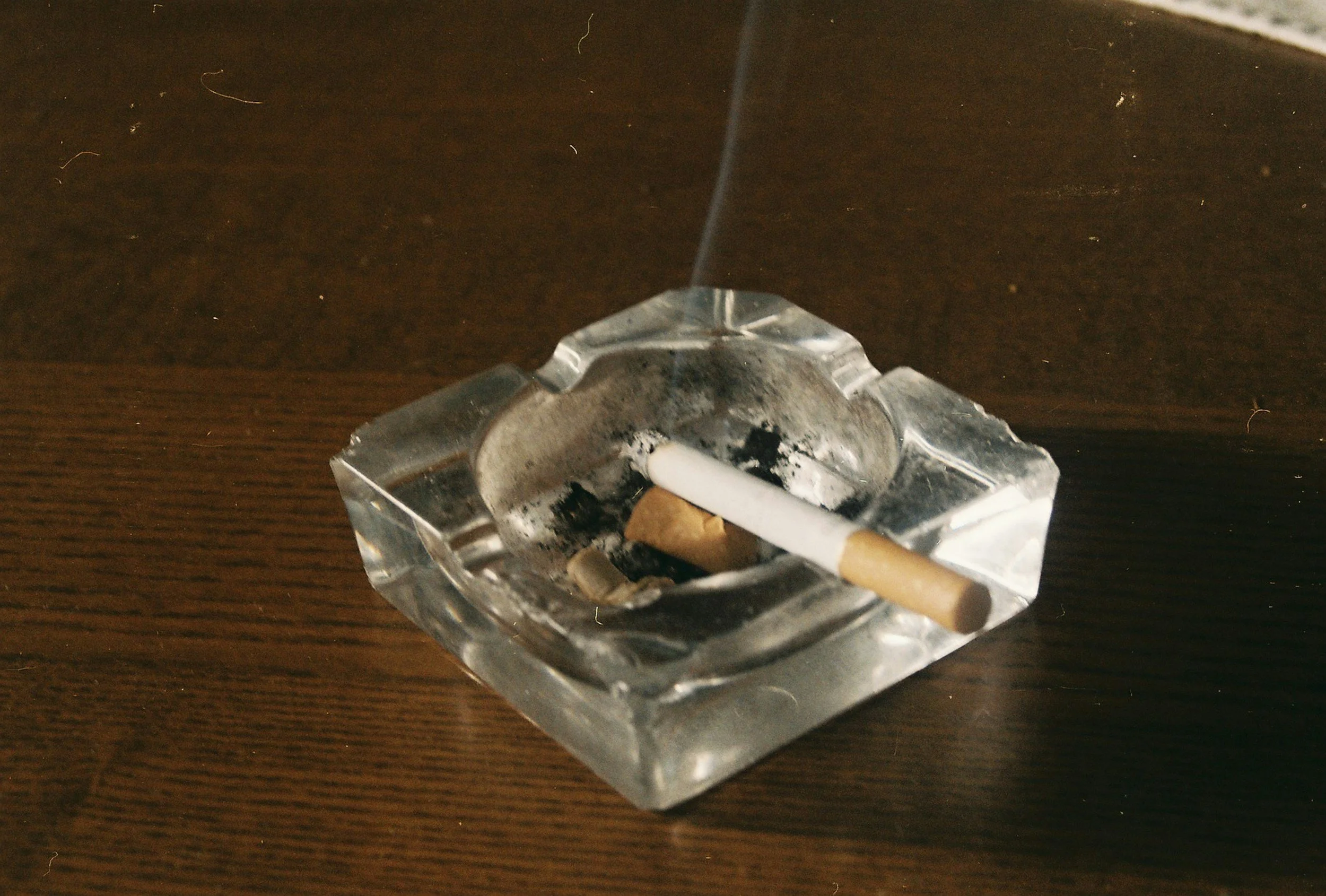
When you spend years in an unstable or unsafe relationship, your mind and body are constantly scanning for incoming danger. Your instinct is telling you to run or defend yourself, but as a lifelong peacekeeper, a fawner, confrontation feels like a death sentence. For many, like myself, I learned early on that confrontation cost me dearly, like being kicked out of the house just for asking my father and stepmother not to smoke.
On top of our personal history, society actively conditions us to be built this way. From a young age, women are raised to be accommodating, self-sacrificing, and easy to manage. We are praised for being "good girls" who don't cause trouble, while female anger is labeled as hysterical, crazy, or unhinged. Society rewards us for suppressing our voices, and our nervous systems quickly learn that staying silent is the safest way to belong.
So, you force yourself to be as quiet as a mouse. You swallow your boundaries (well, in truth, I did not have many), stay quiet, absorb their emotional stresses, and make yourself as small and agreeable as possible. You basically become a sponge that takes it all in, with nowhere for any of it to go.

Imagine a heavy pressure cooker sitting on a high-heat stove. On the outside, it’s quiet, sealed tight, and appears completely controlled. But inside, the steam is building, the lid is straining, and the internal pressure is climbing to a dangerous level.
That is what emotional suppression actually is. You aren't peaceful; you are operating in invisible, intense internal tension. However, most of us fawners have no idea that we are even in the pressure cooker pot.
We just think we are "good listeners" and "bendable," believing that if we just give enough, things will eventually get better. But most of our exes just kept taking and taking. We rarely understand what we are doing in the moment, mistaking our hypervigilance for kindness and convincing ourselves that if we just keep everyone else happy, we will finally be safe.
The Explosion Isn't a Monster: It's an Emergency Release
Eventually, the pressure lid gives out.
When you are hardwired to fawn, pleasing and placating aren't choices. They are desperate biological attempts to keep the peace and stay safe. But fawning doesn't erase your anger; it represses it.
When you finally separate, or when the provocation goes one step too far, your amygdala takes over, hijacking control before your logical brain (your prefrontal cortex) can step in to contain years of silenced grief and buried anger. The biological pressure cooker simply pops.
That "Medusa moment", the screaming, the shaking body, the raw fury, isn't a sudden descent into being "crazy" or toxic. It is every unspoken boundary, every swallowed insult, and every hidden heartache erupting all at once because your body simply could not carry another drop.
It is an automatic self-defense release from a nervous system pushed way past its capacity.
Explore More on CPTSD & Recovery:
Realizing that your sudden explosive rage and chronic fawning stem from complex trauma (CPTSD) Listen to my podcast episode Divorce Trauma and CPTSD -When Pain Doesn’t End After it’s Over.
Healing Means Releasing the Shame

If you are carrying guilt over how you reacted during or after your relationship ended, hear this clearly: Reacting to chronic chaos is not evidence that you are chaotic. It is evidence that you were an abused human.
You do not need to forgive yourself for becoming a Medusa, because you were never that to begin with. You were a human being reaching the absolute outer limit of what your nervous system could contain.
The path forward isn't about learning to suppress your feelings better so you never blow up again. It’s about learning how to safely listen to your body long before the pressure reaches a critical state, so you can step out of survival mode and step back into yourself.
Related Reading: If you are navigating a split and finding yourself constantly giving in, absorbing blame, or shrinking to avoid conflict during legal negotiations, read my foundational deep-dive: How People-Pleasing Impacts Your Divorce: Breaking Free from the Cycle
Listen to the Podcast: Want to explore how chronic fawning keeps us stuck in toxic dynamics during major life transitions like divorce? Listen to "The Exhausted People Pleaser: Moving From Fawning to Freedom" on Spotify
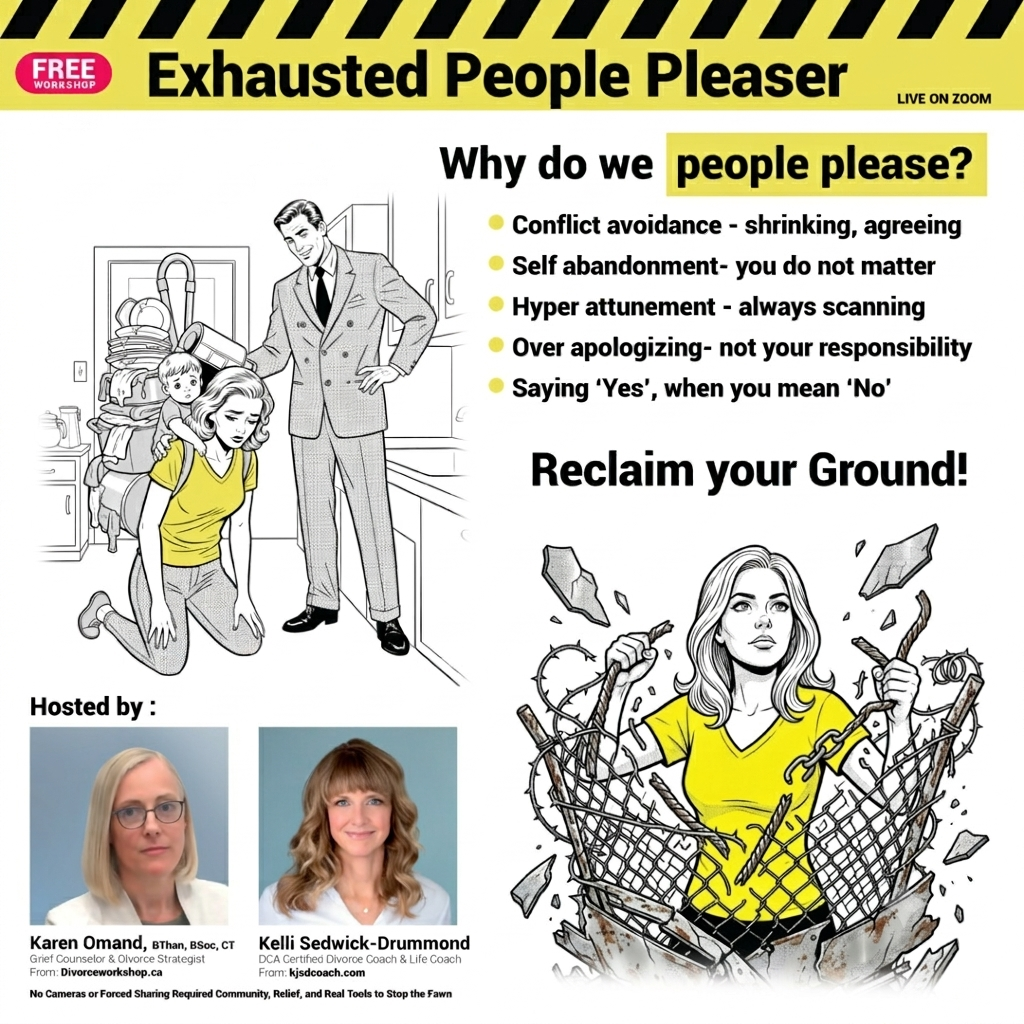
Join Our Free Live Workshop: Exhausted People-Pleasers
Are you ready to stop giving away your "best towels" to people who only want your silence?
Join me for our next upcoming free workshop: Exhausted by Peacekeeping? Breaking the Cycle of Chronic People-Pleasing. Together, we will move from the fog of automatic programming into the light of conscious choice. You aren't "bad" for choosing yourself; you’re finally just coming home.
The Session: A 60-minute "Quiet Session" (no cameras required, no forced sharing) to dismantle the bracing reflex.
The Frequency: We host this live workshop every other month.
The Bonus: Sign up today and get your Emergency Reset Kit sent straight to your inbox immediately.
👉 [Sign Up for the Free Workshop Here]
(Click below to see our next live date and lock in your spot)