
6 Ways Uncontrolled Emotions Can Cost You in Your Divorce

The Moment My Nervous System Took Over
Divorce is a journey filled with peaks and valleys, twists and turns, and emotions that often run high. As I reflect on my own divorce journey, vivid memories flood my mind, moments brimming with intense feelings that seemed to overwhelm every aspect of my life.
One particular memory stands out. About a month after we separated, I received a phone call from my ex. Words were exchanged, and in a moment of sheer frustration and anger, I found myself screaming into the phone like a wild animal. I had suppressed years of emotions, and it all erupted at once, what I now recognize as The Medusa Moment: Why People-Pleasers Experience Sudden Explosive Rage.
Unfortunately, instead of a resolution, my outburst only fueled further conflict.
Was I justified in my anger? Yes. Years of constant blame, projection, lies, neglect, and financial abuse had worn me down, and I was completely done.
Did I need to express that anger? Absolutely.
Did I need to express it that way? No. All it did was make an already tough divorce even tougher.
Looking back, what I experienced in that moment was a full nervous system hijack.
Why Antagonistic Personalities Trigger a Survival Response
When you are dealing with an antagonistic personality, someone who relies on continuous blame, manipulation, and provocation, your body stays on high alert. A single phone call can drop you straight into a fight-or-flight survival state. When your nervous system is dysregulated like that, the rational, calm part of your brain literally goes offline, making it almost impossible to respond with composure.
That outburst became one of the hardest, and most valuable, lessons I had to learn. I realized that managing my divorce emotions wasn't just about willpower; it was about learning how to recognize when my nervous system was overloaded so I could protect myself from taking the bait.
Understanding CPTSD (Complex Post Traumatic Stress Disorder)

In an episode of the Just Separated Podcast “Divorce Trauma and CPTSD'“ with Therapist Sara Fischer Sanford (listen on Spotify or watch on YouTube), I sat down with Sara Fischer Sanford a licensed therapist to discuss how an antagonistic divorce can trigger Complex PTSD (CPTSD). As we explored in that conversation, prolonged exposure to emotional abuse or relentless conflict conditions your body to treat your ex as a constant threat.
The Reality: Divorce is an Emotional Event with Legal Implications
It’s often said that marriage is a financial contract, but how many of us truly understand that when we say "I do"? We start in love with cherished memories. In divorce, we are forced to detach emotionally and physically, a massive task.
It’s almost as if we have to learn to act: to navigate this new terrain with composure and detachment, even when every fiber of our being wants to scream.
This emotional detachment is crucial in three major areas:
Co-parenting: To shield your children from witnessing toxic conflicts.
Legal proceedings: During mediation, litigation, court, or negotiations.
Lawyer communication: Keeping hours (and bills) focused on facts, not venting.
Managing emotions constructively isn't easy, especially in high-conflict situations. But failing to manage them carries severe costs.
6 Ways Uncontrolled Emotions Can Cost You in Divorce
The Emotional Trap: Divorce emotions don't just feel uncomfortable, they directly impact your budget, your kids, and your future.
1. Decreased Productivity:
Divorce disrupts your concentration. Fatigue, stress, and constant irritation make meeting work commitments or managing daily life feel impossible.
2. Impulsive Decision-Making:
High emotions lead to hasty choices without long-term thinking, like accepting a bad financial settlement just to "get it over with," or hastily moving out of the family home without assessing the legal or parenting impacts. Make sure you get the right support systems around you to help you make the best decision for you and your children.
3. Heightened Conflict & Escalated Costs:
Disagreements over custody or asset division quickly turn into lengthy, emotionally draining legal battles that deplete your savings and ruin your physical health.
4. Rigid Thinking:
Becoming entrenched in your perspective hinders negotiation. Refusing to compromise on minor details prolongs the divorce, dragging out both financial costs and emotional strain.
5. Symbolic Disputes:
Seemingly minor fights, like arguing over a specific piece of furniture, are rarely about the item. They usually symbolize unresolved feelings of control or resentment. My parents fought over paintings and they were not of real value. It is important to step back and understand why you want these things is it about the item or something deeper.
6. The Trap of Retribution:
Feeling the urge to seek revenge, like withholding child support payments (my ex did that for years) or dragging out disputes, only escalates conflict and prolongs your pain. When you are dealing with a narcissist, this dynamic becomes even more dangerous because they operate from a completely different playbook. They often feel entitled to everything and will actively trigger you to provoke a reaction.
As world-renowned narcissist coach Tracy Malone and I discussed in an episode of the Just Separated Podcast (listen on Spotify or watch on YouTube), falling into the trap of trying to out-retaliate an antagonistic ex only keeps you trapped in their game. Redirecting your focus toward firm boundaries, strategic documentation, and calm negotiation is the only way to protect your peace and starve the conflict.
Turn Your Emotional Season Into Growth
It all starts with awareness. You cannot change a pattern until you recognize you are in it.
Realizing that your anger is a natural nervous system response, or seeing clearly how an antagonistic ex has been triggering you, isn't a failure. It is the very first step toward taking your power back.
Navigating this emotional storm alone is exhausting, and you were never meant to carry it all by yourself. Seeking the right support, whether that means working with a therapist, connecting with a coach, or using targeted tools, gives you the safe space you need to process the pain off the field so you can stay composed on it.
When you combine awareness with proper support, you stop reacting to the storm and start steering your own ship. Growth doesn't mean you never feel angry or overwhelmed; it means you finally have the tools and the team to protect your peace through it all.
Resources to Help You Navigate
Listen: Check out my popular episode of theJust Separated Podcast, featuring a popular and great conversation with Chris Stuart on YouTube and Spotify about How Your Emotions Can Cost You in Divorce.
Take the Next Step with Confidence
Divorce is overwhelming, but you don't have to navigate it blindly.
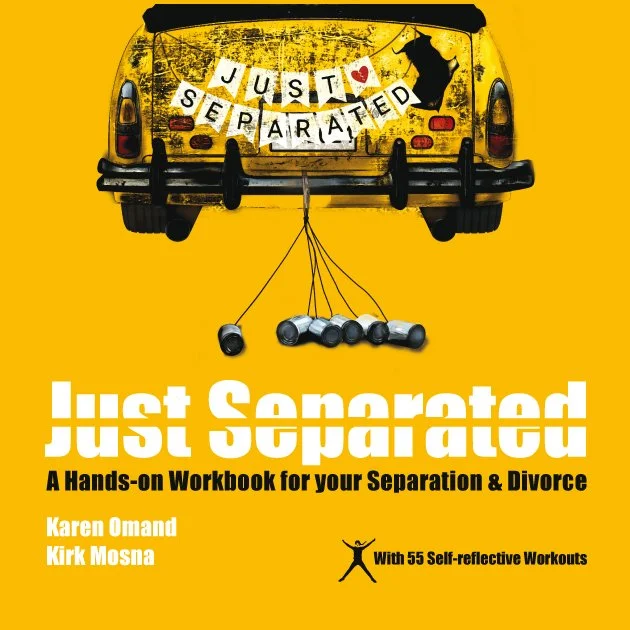
Just Separated: A Hands-on Workbook for Your Separation and Divorce is designed to be your practical roadmap through the emotional and legal fog. Instead of a dense manual, it’s a toolkit you can jump into exactly where you need help most—whether that’s co-parenting logistics or reclaiming your financial independence.
Stop guessing and start rebuilding.
👉 [Download your free 22-page sample here] 📖 [Order the full workbook on Amazon Worldwide]