
The Hook: The 911 Call to the Tribe
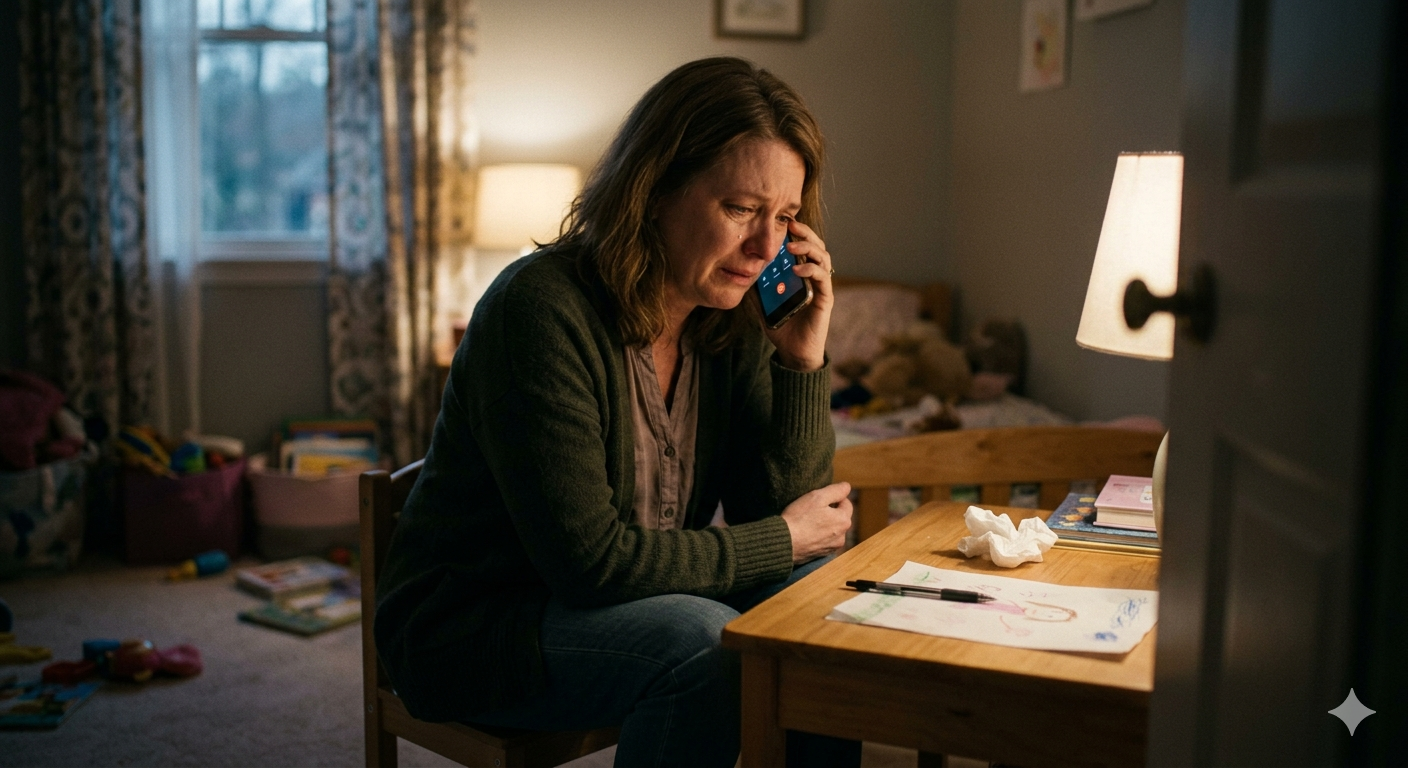
I remember sitting in my youngest daughter’s room, hunched over her small desk. It was the only place in the house I felt safe to speak; my ex-mother-in-law lived in the basement, and I lived in constant fear of her hearing my conversations.
This was about two months before I finally left. My phone was trembling in my hand as I dialed my older sister’s number. My heart wasn't just racing; it was hammering against my ribs like I was running for my life.
I didn't call her for legal advice. I didn't call her for a shoulder to cry on. I called her to ask a question that reveals the terrifying core of the fawn response:
"Would you be embarrassed if I got a divorce?"
In that moment, her potential shame weighed more than my own misery. I was looking for a "hall pass" to save my own life.
“She said, "No. Of course not."
I reflect on this now and I wonder: Why did I ask this? Why would her opinion really matter? I have thought about this for a long time. I realize now that I was treating her opinion like a life-raft. I wasn't actually asking for her opinion; I was asking for her protection.
To a fawner, the threat of "embarrassing" the family feels like a biological emergency. If I caused her shame, would I be cast out? Exile from the "tribe" feels like a death sentence. Her "No" wasn't just a comfort, it was the permission I needed to believe I could survive the fallout of my own freedom. My question wasn't really about her; it was about my own survival.
Even today, it feels strange. I still find myself wondering if I actually did cause her embarrassment, despite her answer. It is a lingering ghost of the fawn response: the deep-seated belief that my need to breathe might be an inconvenience to my family.
But two months before the exit, huddled at that desk to hide from the woman in the basement, the 'tribe's' embarrassment felt like a biological emergency to me. I wasn't just asking for permission to leave; I was asking for permission to exist.
The "Good" Divorcee Trap

Even after I finally said "enough", after five attempts, the first only a year into the marriage, the fawner in me didn't shut off. It went into overdrive. I didn’t just leave; I helped his exit.
I spent hours helping him pack. I hand-picked the best memories from our huge photo collection for him to take. I even made sure he had the best towels. I even gave him the cremations of some of our dogs, the very ones I had loved and cared for myself, because I wanted to keep everything "nice" and avoid any upset.
I was carrying a heavy, suffocating guilt. It was the classic fawner’s trap: even though he was the one who had the most responsibility for ruining the marriage, I was the one feeling the weight of the failure. After years of being blamed for everything that went wrong, I had internalized the idea that I was the problem.
I was bleeding out emotionally, yet I was trying to "buy" my way out of being the "villain" by staying in that "People pleaser Karen" role until the very last second and by the way I was like this for quite a long time during the separation process. Looking back, I know now that with an antagonistic personality, being "nice" was never going to work. But I had no idea back then.
From Resentment to ‘Cold Clarity’

The resentment I carried had been growing for years, like a tree getting bigger and stronger with every passing season. It showed up in the way I avoided him, the way I detached, and the way I simply didn't want to be in his presence anymore. By the time I finally left, I had already tried four other times, the first attempt happening only a year into the marriage. I had given him way too much of myself, and my habit of justifying his behavior was finally reaching its end.
Research shows that resentment is the slow burn of self-betrayal. Every time I gave away a "best towel" or sought a hall pass to save his feelings, I was betraying my own needs to keep the peace. Eventually, that resentment curdled into contempt. I felt a false sense of moral superiority: “I am being a saint by making this easy for you, and you’re just taking it.” I realize now that contempt is just the brain’s way of creating distance when you aren't allowed to set a healthy boundary.
But then, the circuit breaker flipped. People often ask if I felt guilt or if I felt apathy. The truth is, I felt both, and it was a confusing "both/and" nightmare. The heavy guilt, the kind that comes from years of being blamed for everything, was what made my hands move. It’s what made me pack his boxes and hand over the dog cremations. I was still trying to "buy" my way out of being the villain, performing the role of "Peace Maker Karen," which I have to admit continued for years after the separation.
But underneath that performance, a cold apathy had taken over. I wasn’t being "generous" or "kind" anymore; I was simply empty, vibrating with nothing but nerves. That had grown in me for years to feel that cold towards someone you once loved. I think I gave him the towels and the photos because, honestly, I just wanted him gone and I did not want to cause trouble or confrontation. My nervous system had finally chosen survival over performance.
The moment he finally left the house with his mother, the relief was deafening. I was still suffering,my body carrying the toll of years of abuse, and I was emotionally shredded, but the air in the house had finally changed. I stopped asking for permission because the "tribe’s" opinion had finally become background noise.
The Ghost of the "Family Cautionary Tale"
Years later, the fear I felt during that 911 call to my sister was validated in a single sentence. My aunt wrote to my sister, pointing at the messy, difficult reality of my new life as I struggled to rebuild from scratch:
"Look at Karen’s life. Do you want that?"
My aunt didn’t necessarily mean it badly. She knew how bad things were in my marriage, but her words revealed the deep, generational fear of the "tribe." Even though she saw my suffering before, she saw my struggle now as a greater threat. To her, the hardship of my freedom was proof that I should have stayed and endured.
To a fawner, this is the social death penalty. It’s the confirmation that the people you love might still use your survival as a warning label. She wasn't looking at my courage; she was looking at the price I was paying for leaving an abusive partner.
This is the "ghost" that keeps so many people trapped. We are terrified that our loved ones will point at our struggle and say, "See? It wasn't worth it." But I realize now that even a difficult, rebuilding life is better than a "safe" one where you aren't allowed to breathe. Her fear for me wasn't a reflection of my worth; it was a sign of how much we are taught to fear our own freedom.
Why It Feels Like a Biological Emergency

Your amygdala doesn't know the difference between a judgmental relative and a predator in the woods. To your nervous system at that moment:
Disappointing the Tribe= Exile = Death
This is why, while I was packing his boxes, I gave away the best towels and the dog cremations. I was subconsciously trying to "buy" safety. My brain was whispering, “If I’m helpful enough, ,if I’m the 'Good' Divorcee, maybe they won't use me as the 'bad example' to keep everyone else in line.” At the desk that day, I was in a biological tailspin because I thought that in my family, survival is viewed as a warning label rather than a victory. I thought that if my new life wasn't "perfect" or "convenient" for the family narrative, it may be used against me. Though I am not sure that was true, I definitely thought that.
Survival Strategies for the "Cautionary Tale"
Awareness is the first step toward breaking a cycle that has been programmed into us for some since childhood. For most of us, these behaviors are so automatic we don't even see them as choices, I obviously didn’t. To find your way out, you have to start naming the patterns:
Stop Seeking the Hall Pass: You will never get a unanimous vote of approval from people who benefit from your self-sacrifice. If their "peace" depended on your silence, they would never applaud your voice.
Recognize the "Over-functioning" Reflex: Most of us are totally unaware we are doing this because it is a subconscious survival strategy. We pack the boxes, we clean the house, we give away the "best towels" to manage his emotions and the tribe's opinion. Research shows this is Anticipatory Fawning—your nervous system trying to "pre-pay" for your safety so nobody gets mad. This exhaustive pattern often rules the daily routine long before the final breaking point; if you were the one carrying the entire domestic load just to keep the emotional baseline steady, you'll deeply relate to my blog, When You’re the One Who Does Everything: The Housework Divide That Breaks Marriages.
Honor your "Compassion Fatigue": If you feel cold or "done," don't judge yourself. That apathy isn't "mean", it’s your brain’s circuit breaker protecting you from total exhaustion. It is a sign that you have finally run out of the energy required to manage other people's lives. It’s the silence that allows you to finally hear your own thoughts.
Becoming the Family Cautionary Tale: When someone says, "Look at her life," they are judging your reconstruction through the lens of their own fear. These are the enablers of the system you left. Even when they knew it was bad, even when they saw you drowning, they preferred your quiet suffering over the "mess" of your freedom. To them, your non-compliance is a threat because it proves the family "script" is optional. Their discomfort isn't a reflection of your failure; it is simply the price of your liberation.
The Cost of Admission
Disappointing people is the price of admission for a life of integrity. It is an expensive ticket, and the rebuild is rarely easy, but the destination—a life where you don't have to ask permission to breathe, is worth every penny.
If you are ready to stop managing everyone else's emotional climate at the expense of your own sanity, listen to this episode on the Just Separated podcast : The Exhausted People Pleasers: Moving on from “Fawning to Freedom”for a deeper look into how these survival responses manifest. You can also read my blog How People-Pleasing Impacts Your Divorce: Breaking Free from the Cycle to help you identify where you are still over-functioning.
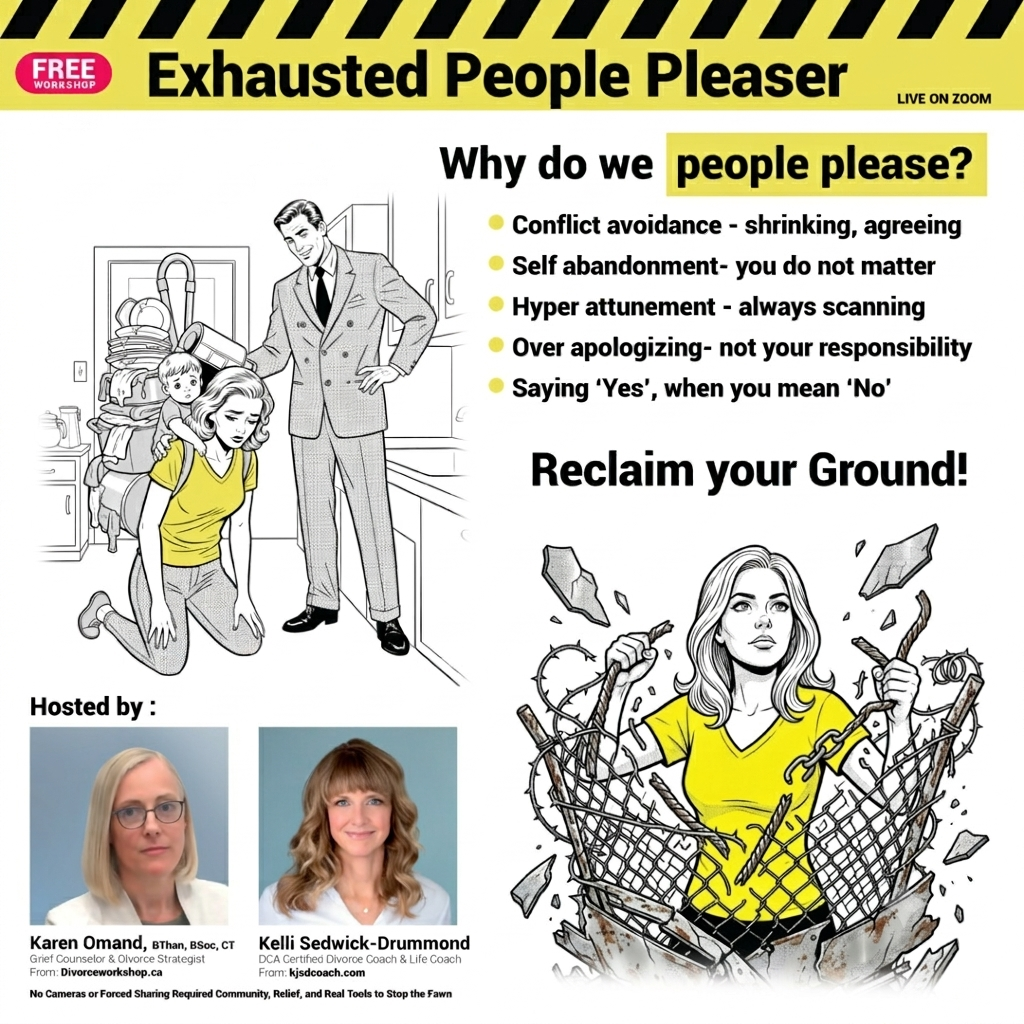
Join Our Free Live Workshop: Exhausted People-Pleasers
Are you ready to stop giving away your "best towels" to people who only want your silence?
Join me for our next upcoming free workshop: Exhausted by Peacekeeping? Breaking the Cycle of Chronic People-Pleasing. Together, we will move from the fog of automatic programming into the light of conscious choice. You aren't "bad" for choosing yourself; you’re finally just coming home.
The Session: A 60-minute "Quiet Session" (no cameras required, no forced sharing) to dismantle the bracing reflex.
The Frequency: We host this live workshop every other month.
The Bonus: Sign up today and get your Emergency Reset Kit sent straight to your inbox immediately.
👉 [Sign Up for the Free Workshop Here] (Click below to see our next live date and lock in your spot)