
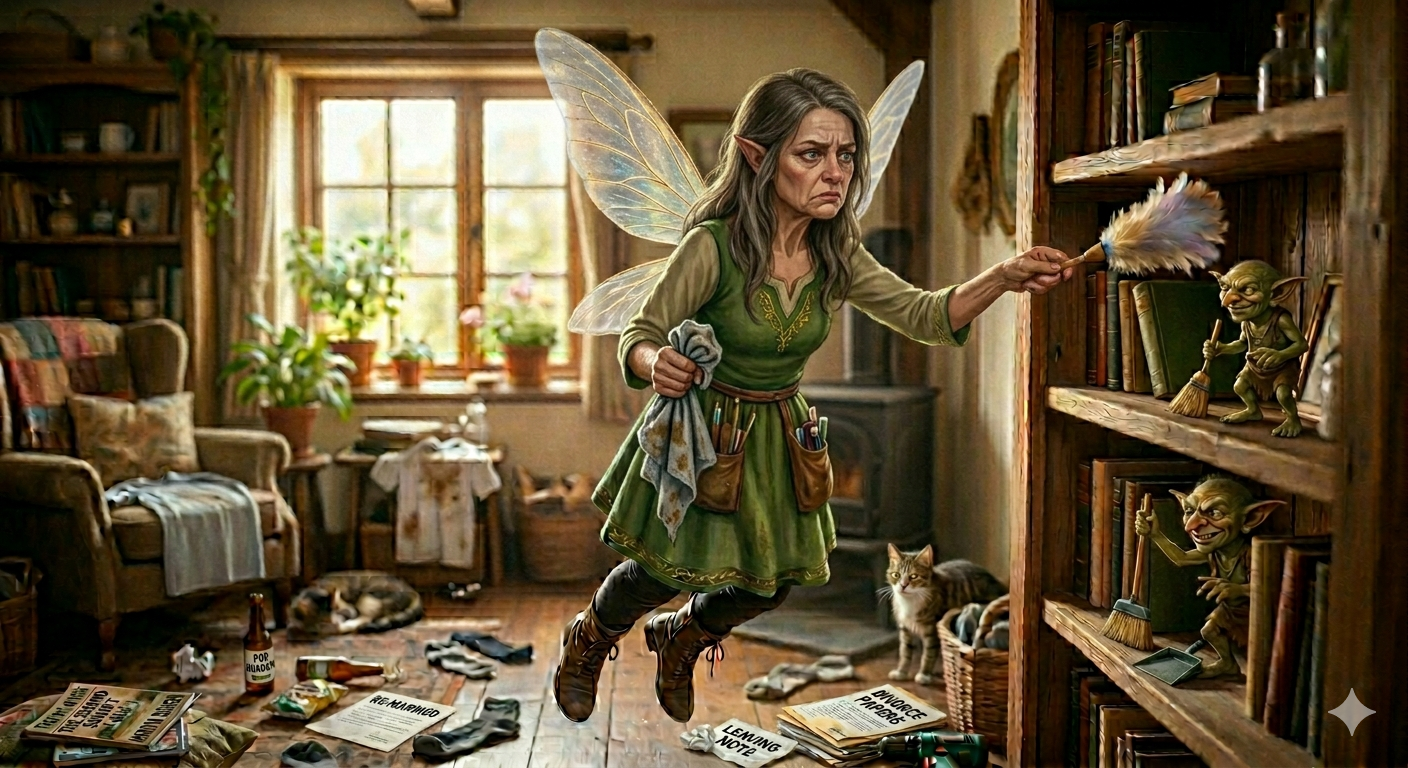
In a blog I wrote a while back, [When You’re the One Who Does Everything: The Housework Divide That Breaks Marriages], I talked about the exhausting reality of the invisible workload. I shared how a University of Alberta study confirmed what so many of us know in our bones: women are drowning in domestic labor, and the patterns rarely change over time.
But today, I want to pull back the curtain on the darker, psychological side of that divide.
Behind the Trail of Garlic Powder and Toenails
Near the end of my own 19-year marriage, my frustration evolved into something much heavier than just being tired. I was getting physically sick of cleaning up after a grown man.
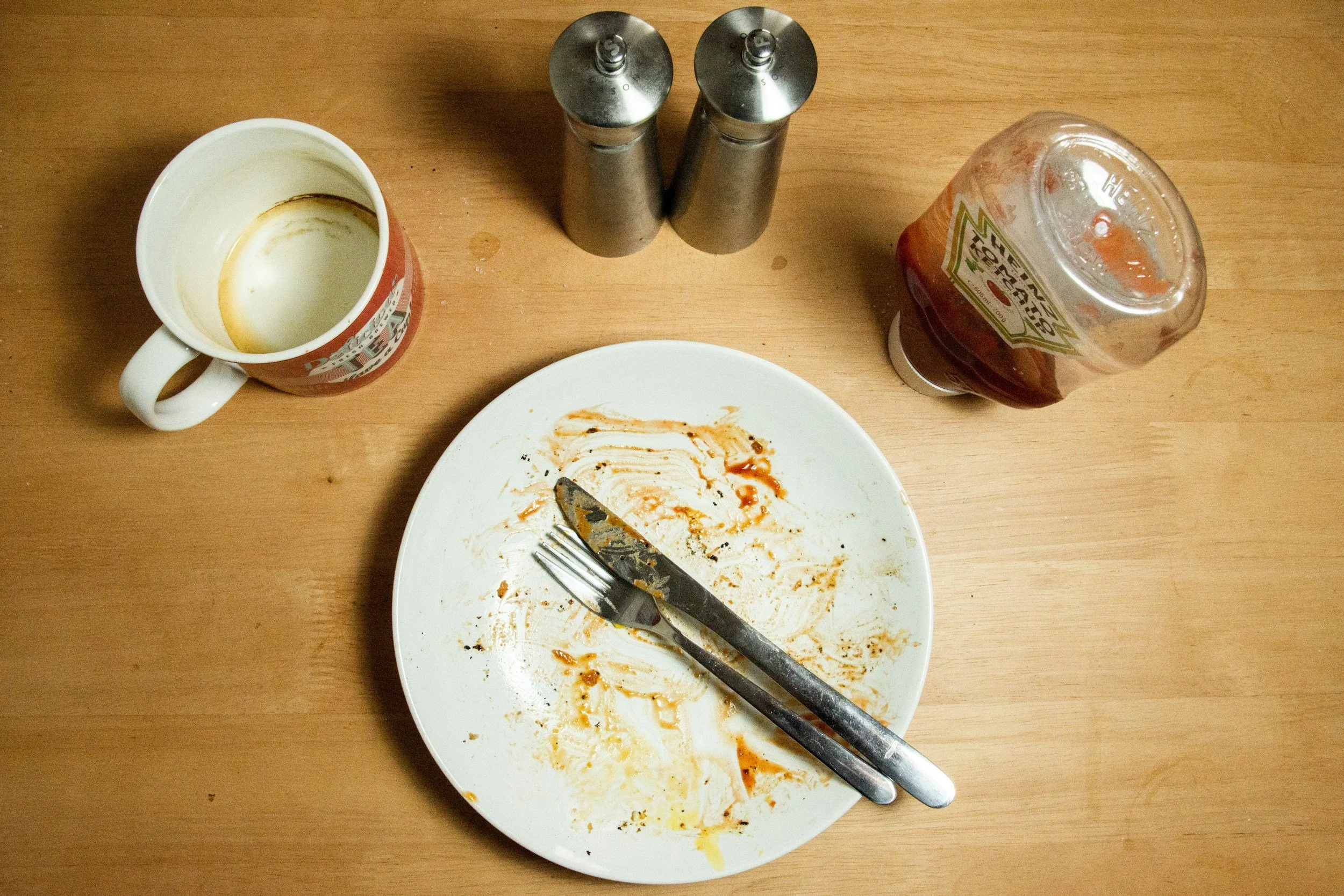
I’m talking about a partner who was entirely incapable of putting a plate in the dishwasher. A man who would leave his clipped toenails all over the couch, and leave garlic powder scattered across the counters like snow after cooking. Outside, it was the same story, no lawn cutting, no snow shoveling. Just me, handling it all.
I would follow behind him, picking up his trail, whispering bitter words under my breath so he wouldn't hear me:
"Am I your cleaning fairy?"
It started as a sarcastic defense mechanism. But looking back, it was a cry for help from a woman whose soul was being eroded by this chronic entitlement.
The Trap of "Giving and Giving"
Am I at fault for how long it lasted? Yes, in a way. Because for years, I just kept giving. And giving. And giving.
When you love someone, and when you are desperately trying to keep a two-decade marriage afloat, you convince yourself that it’s easier to just do it yourself than to have the fight. You tolerate the toenails. You wipe up the garlic powder. You shovel the driveway in the freezing cold while they sit inside. You minimize it. You tell yourself, "It's just how he is."
Fawning as Survival, Not Kindness
Looking back, the anger I feel at my former self for tolerating it is heavy. But I have to remind myself: my people-pleasing wasn't "being nice." It was a fawn response. I didn't handle everything because I wanted to be a martyr; I did it because appeasement felt safer and quieter than facing the alternative.
Let’s be completely honest about what happens when you live with an entitled spouse. You don’t handle everything because you love the workload. You do it because the cost of not doing it is too high.
The Invisible Weight of Societal Blame

If I left the dishes and hadn't cleaned up, the house would have been a bloody mess, and society would have blamed me, not him. As women, we carry the invisible weight of knowing that the state of the home is judged as a reflection of our worth, while the entitled partner gets a free pass to just exist in the space. So, you just keep doing more, and more, and more to keep your head above water.
But here is the hard truth about giving to someone who operates from a place of entitlement: They will never wake up and realize they’ve taken too much. They will just keep taking until you have nothing left.
Eventually, after years of swallowing your own needs and your entirely justified anger, all that giving turns into something lethal to a marriage: contempt.
The Ugly Truth: It’s Not Laziness, It’s Entitlement
For a long time, I thought this was just about cleanliness. But as I started studying relationship dynamics and domestic abuse research, a massive, chilling lightbulb went off.
I remember listening to a podcast featuring Lundy Bancroft, a leading expert on controlling and abusive partners. He explained that we often assume coercive control is defined by explosive anger or a partner "losing control."
The reality is the exact opposite: abuse and control are not driven by anger. They are driven by entitlement.
While toxic entitlement can certainly exist in any gender, when a spouse operates from it in the home, they genuinely believe they are the center of the universe. They believe their time is inherently more valuable than yours, their comfort matters more than your exhaustion, and that you exist to manage their environment and absorb their messes

For years, I thought I was just trying to keep a fiery temper at bay. But it wasn't about managing his moods; it was simpler and colder than that, it was the rigid, unspoken expectation that I was put on this earth to clean, cook, and serve. Period.
If this behavior were truly driven by an inability to manage anger or stress, he would lose his temper everywhere. He would scream at his boss, flip out on his coworkers, or throw a public tantrum when things didn't go his way. But he didn't. Entitled partners manage their behavior perfectly fine out in the world. They selectively bring this hostility home because they view their spouse as beneath them.
Anger is just the smoke they use to back you into a corner; entitlement is the actual fire.
Why Did I Think This Was My Role?
But why did I accept that? Why did I genuinely believe, for nearly two decades, that this was my role?
The truth is, I was conditioned to think it was. From the time we are little girls, we are fed a cultural script about what a "good wife" and a "good mother" looks like. We are taught that love means self-sacrifice, that keeping a peaceful home is a woman's ultimate responsibility, and that if the marriage is struggling, it's because we didn't give enough. I took on the role of the cleaning fairy because society taught me that my value was tied to my usefulness. I thought that pouring myself out until I was empty was just what women did to keep their families together.
The Cultural Conditioning of Men

Where does this come from? It is deeply societal and cultural. Men are culturally conditioned to believe that their careers, their rest, and their leisure time come first. Society reinforces this by giving men a pass for being "clueless" or "lazy" at home, while holding women to an impossible standard of perfection.
An entitled man doesn't think he is being abusive; he simply believes he is operating within his natural rights as the head of the household. He leaves a bloody mess because culture has taught him that someone else will always come along to wipe it up.
When the Mask Slips
When you look at the spectrum of domestic abuse, it almost always starts here. The belief that "you owe me" is what makes a partner feel justified in treating you poorly. Leaving toenails on the couch, leaving a mess, and expecting you to do all the heavy lifting isn't just "laziness"—it is a daily, boundary-crossing declaration of dominance. It's a way of saying, I am above this labor, and you are beneath it. And when you dare to challenge that cultural script, when you stop playing the cleaning fairy, that is usually when the mask slips, and the entitlement turns into overt anger, punishment, or gaslighting to force you back into submission.
Firing Yourself from the Job
If you are nearing the end of your own long marriage, or if you are in the midst of a divorce wondering how you let it go on for so long, I want you to hear me:
You are allowed to hand in your wand.

Recognizing that your spouse's behavior was a form of entitlement, and that your "giving" was how you survived for years, is incredibly freeing. The contempt you finally felt wasn't a sign that you are a bad person; it was your soul's way of screaming that you deserved to be respected.
Divorce after decades is terrifying, but it is also the exact moment you get to reclaim your time, your energy, and your dignity. No more toenails on the couch. No more garlic powder on the counter.
Just your life, clean, beautiful, and on your own terms
Resource & Further reading
Bancroft, Lundy. Why Does He Do That? Inside the Minds of Angry and Controlling Men. Berkley Books.
This is the definitive text proving that control and abuse are driven by an ideological mindset of entitlement and privilege, not by an inability to manage anger or stress.
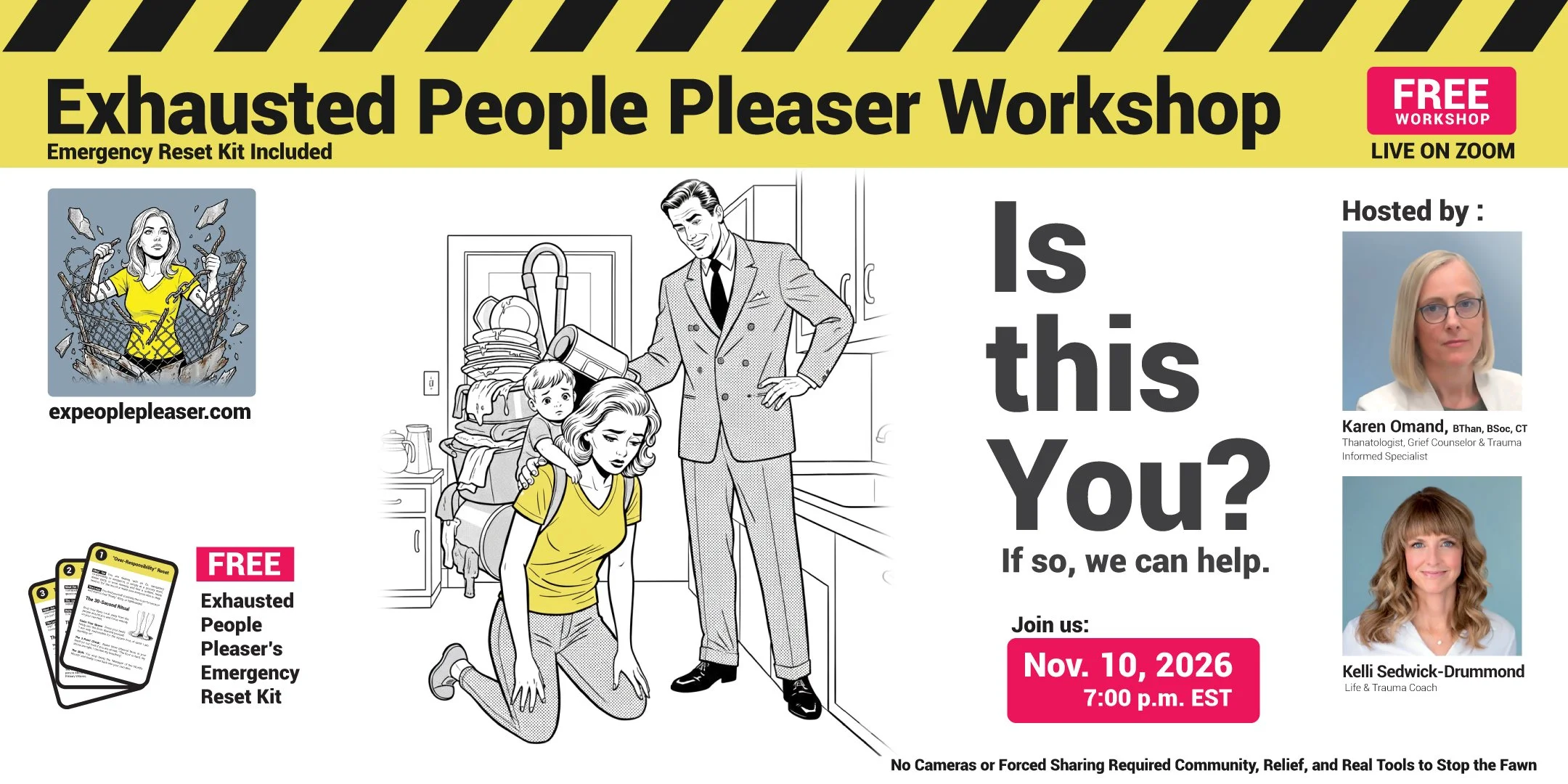
Stop Sacrificing Yourself to Keep the Peace
Are you ready to stop giving away your "best towels" to people who only want your silence?
Join us for our next live workshop: Exhausted by Peacekeeping? Breaking the Cycle of Chronic People-Pleasing. You aren't "bad" for saying no, you're just stopping the constant draining of you.
60-Minute "Quiet Session": No cameras, no forced sharing.
Instant Bonus: Get your downloadable Emergency Reset Kit delivered straight to your inbox upon registration.