
Designed to Fail: How the Family Court System Silences Grieving Mothers
A Legacy of Quiet Rage
When I was growing up, my mother spent years going in and out of family court with my father, who was high-conflict. There were affidavits, court orders, motions and a trial, but never once did anyone ask how it felt when my mother didn’t speak to her daughter for more than a decade. Or how much it costs financially or the mental and emotional toll it took on my mother. No judge questioned what that estrangement meant to us. No professional named it for what it was: a profound loss.
We didn’t have the language. I certainly didn’t. But I remember the look in my grandmother’s eyes when she talked about my father, quiet rage mixed with helplessness and grief. She couldn’t name it either, but she knew something sacred had been broken. The system didn’t care. It was focused on compliance and paperwork, not emotional devastation.
New Seat, Same Broken System
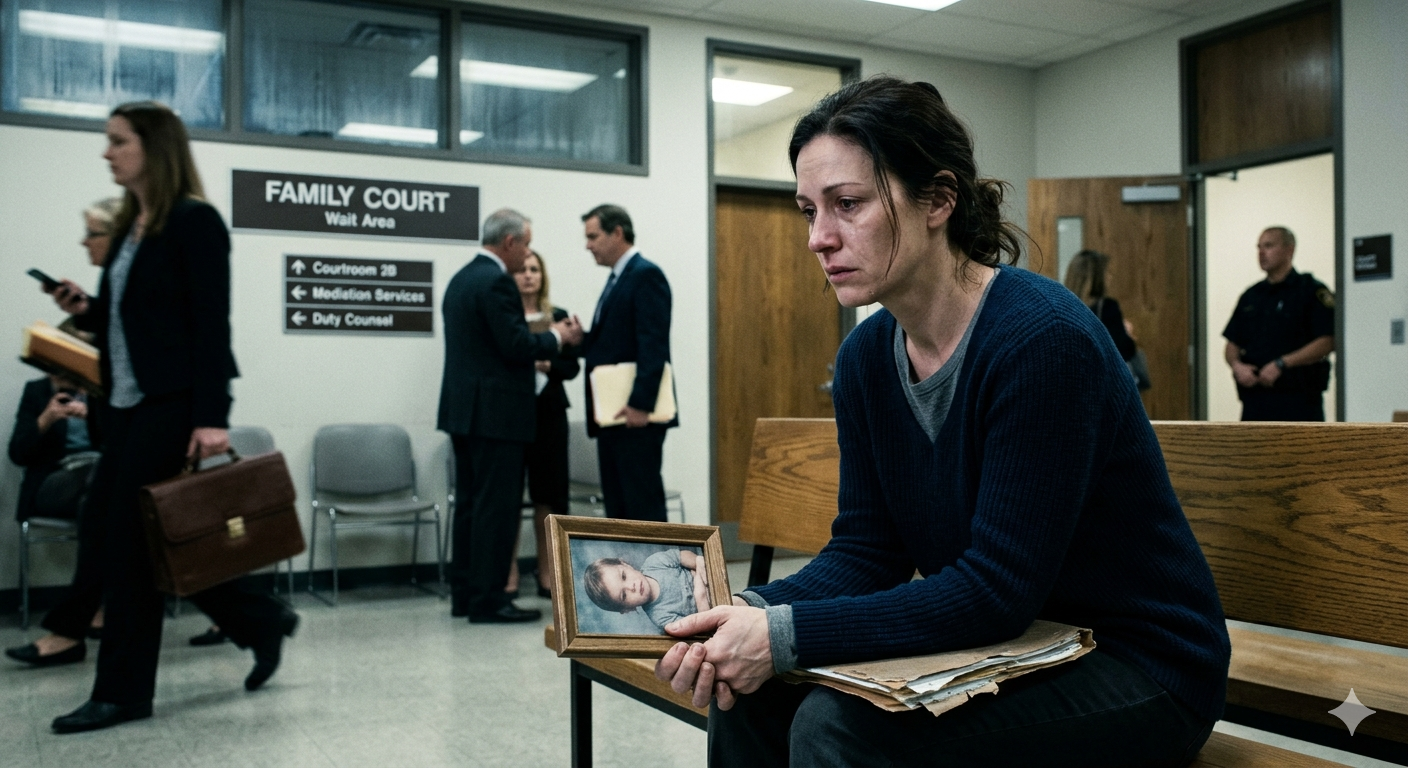
Now, years later, I find myself facing the same system, but from a different seat. I’ve been without child support for years. When I finally went before a judge, he stated, "Why am I here? Why are we here?"
I was stunned. Isn’t it obvious? He is not supporting his children. Isn’t that what the system is meant to enforce? Aren’t we supposed to be putting children first?
Apparently not. After 7 years of him not paying any child support he finally settled to give me the bare minimum for only 3 years. Case closed. Yes, he got away with it.
I was chasing support through a system that feels less like a safeguard and more like an obstacle. It is a system that fails to recognize the reality that grief is real, not irrelevant.
This isn’t just about divorce. It’s about the grief no one acknowledges in family court—the emotional toll of being dismissed, delayed, and denied. I know now what my grandmother must have felt: the rage that comes from watching something unjust happen in slow motion, and being told to stay quiet about it.
There’s a staggering amount of grief in these situations, but no space for it. No permission to feel it. No acknowledgment from the legal system that it even exists.
Family court isn’t built for emotional reality.
The system is designed to process cases, not emotions. Family court focuses on:

Evidence, not lived experience
Timelines, not trauma
Strategy, not sorrow
Judges and lawyers are trained to stay detached and defend. They are expected to keep things moving. And while that may serve efficiency, it fails people who are in the middle of deep emotional upheaval. Grief is often treated as irrelevant, or worse, as a sign of instability.
The divorce system centers power, not pain.
Once a separation begins, everything shifts toward legal positioning. The conversation becomes about custody arrangements, court filings, and parenting schedules. There’s no room to talk about the mother whose child won’t call her “mom” anymore. Or the woman who panics every time her phone lights up with a text from her ex. Or the financial struggle that is incredibly real for so many. These aren’t “legal matters”, they’re heartbreaks. But no one in the courtroom is asking about those.
Grief after abuse is complicated and long-lasting
When divorce involves emotional abuse, coercive control, or post-separation abuse, the grief doesn’t just resolve after the papers are signed. It lingers. It morphs. And it’s often misunderstood, even by professionals. Some therapists, unless they specialize in this area, may minimize or mislabel it. Others try to fix it with surface-level advice, not understanding the depth of the injury. Women are told:
“You should be over it by now.”
“At least you’re divorced.”
“Don’t be high-conflict,” they assume it is both parties are high-conflict.
As a result, many women bury their grief. They keep going. They survive. But they do not heal, not really. Their grief becomes frozen, tucked away because there’s simply no space to process it when you’re constantly in defense mode.
Mothers are punished for being emotional

This is perhaps the most damaging message of all: that to show pain is to look unstable. That expressing grief makes you “bitter” or “vindictive.” So women learn to stay silent. To avoid being labeled. To suppress what is real and raw, because they fear it will be used against them.
But the truth is, these women aren’t unstable. They’re grieving. They’re grieving the loss of time with their children, the collapse of a dream, the betrayal of someone they once trusted, and the failure of a system they hoped would protect them. They are grieving the way they have to prove they’re a good mother over and over again. They’re grieving the legal bills that drain their future, the fear every time an unfamiliar number appears on their phone, and the gut-punch of hearing their child repeat their ex’s words as their own. They are grieving the failed justice system—including my mother and me
What’s missing? Grief literacy
We talk a lot in divorce circles about trauma, self-care, co-parenting, and legal strategy. But we don’t talk enough about grief. About how layered and valid it is. About how long it lasts. About how it often goes unnamed for years because survival comes first.
We need to make room for grief in the divorce conversation. Not as a sign of dysfunction, but as a natural and necessary part of this process. When someone finally says, “This is grief,” it can be a turning point. When someone tells you, “You’re not broken, you’re grieving,” it allows healing to begin.
If this resonates with you, know that your pain is real. Your heartbreak matters. And you don’t have to carry it alone, or in silence anymore. Until we make space for grief in family court, we’re not just failing parents, we’re failing children, too.
The Cost of Silence
The failure of the family court system isn't just emotional—it's economic. When a judge dismisses your request for support, they aren't just ignoring a legal obligation; they are ignoring the survival of your family.
When the system refuses to see our grief, it inevitably refuses to see our financial reality, too. If you are struggling with the weight of "financial survival mode" or the shame of a changing lifestyle, you might find peace in my deep dive into the secondary loss of divorce:
[Read: Money Grief After Divorce: The Hidden Loss No One Talks About]
Take the Next Step with Confidence

Divorce is overwhelming, but you don't have to navigate it blindly.
Just Separated: A Hands-on Workbook for Your Separation and Divorce is designed to be your practical roadmap through the emotional and legal fog. Instead of a dense manual, it’s a toolkit you can jump into exactly where you need help most—whether that’s co-parenting logistics or reclaiming your financial independence.
Stop guessing and start rebuilding.
👉 [Download your free 22-page sample here] 📖 [Order the full workbook on Amazon Worldwide]